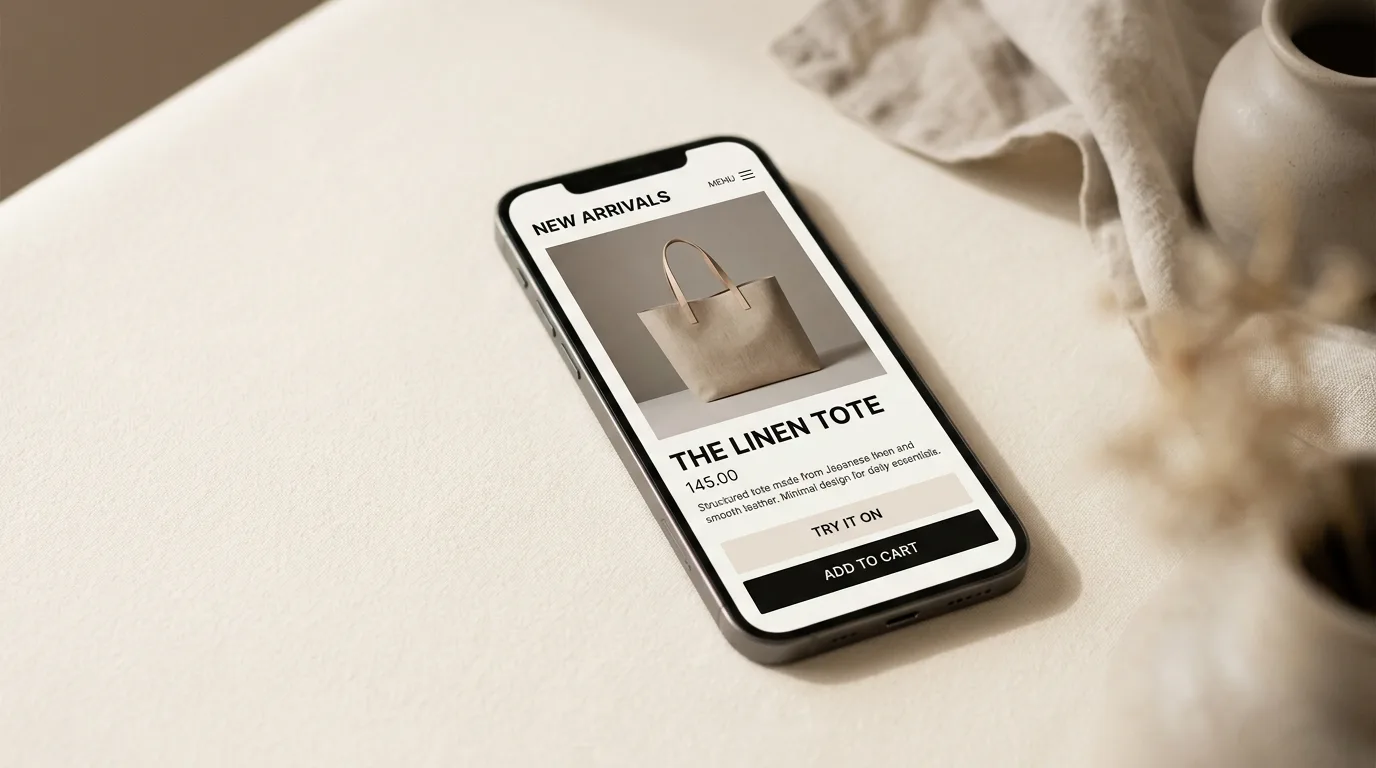
The Returns Problem in Fashion E-Commerce
Returns are the single largest profitability drain in online fashion retail. Industry data paints a stark picture:
- The average fashion e-commerce return rate is 24-30%, compared to 8-10% for other product categories
- Processing a single return costs merchants $10-$25 in shipping, handling, restocking, and potential markdowns
- Globally, fashion returns account for an estimated $200 billion in lost revenue annually
The root cause is straightforward: customers cannot try on products before buying. They order multiple sizes, guess at fit, and return what does not work. It is rational behavior from the customer's perspective — but devastating for merchant margins.
How AI Try-On Addresses the Root Cause
AI virtual try-on attacks the returns problem at its source. Instead of guessing, customers see a realistic image of themselves wearing the product before they click "Add to Cart."
The mechanism is simple. A customer uploads a photo, selects a product, and the AI generates a composite image showing how the item looks on them. The result accounts for body shape, skin tone, and the product's fit characteristics. Typically within 10–20 seconds, the customer has a visual reference that eliminates much of the guesswork.
This is not a gimmick. When customers can see that a dress fits their body shape, that a jacket's proportions work for their frame, or that a color complements their skin tone, they make more deliberate purchase decisions. Fewer impulse buys, fewer multi-size orders, fewer returns.
The Data: What Merchants Are Seeing
Early adopters of AI virtual try-on are reporting measurable improvements across their return metrics. Across TryOn Virtual merchants, try-on is associated with up to 45% fewer returns, up to 32% higher conversion, and 2.5x longer engagement (TryOn Virtual merchant data). The category ranges below show how results vary.
Return Rate Reduction
Merchants offering AI swap try-on for clothing report return rate reductions of 25-45%, with the range depending on the product category and how prominently the try-on feature is positioned on the product page.
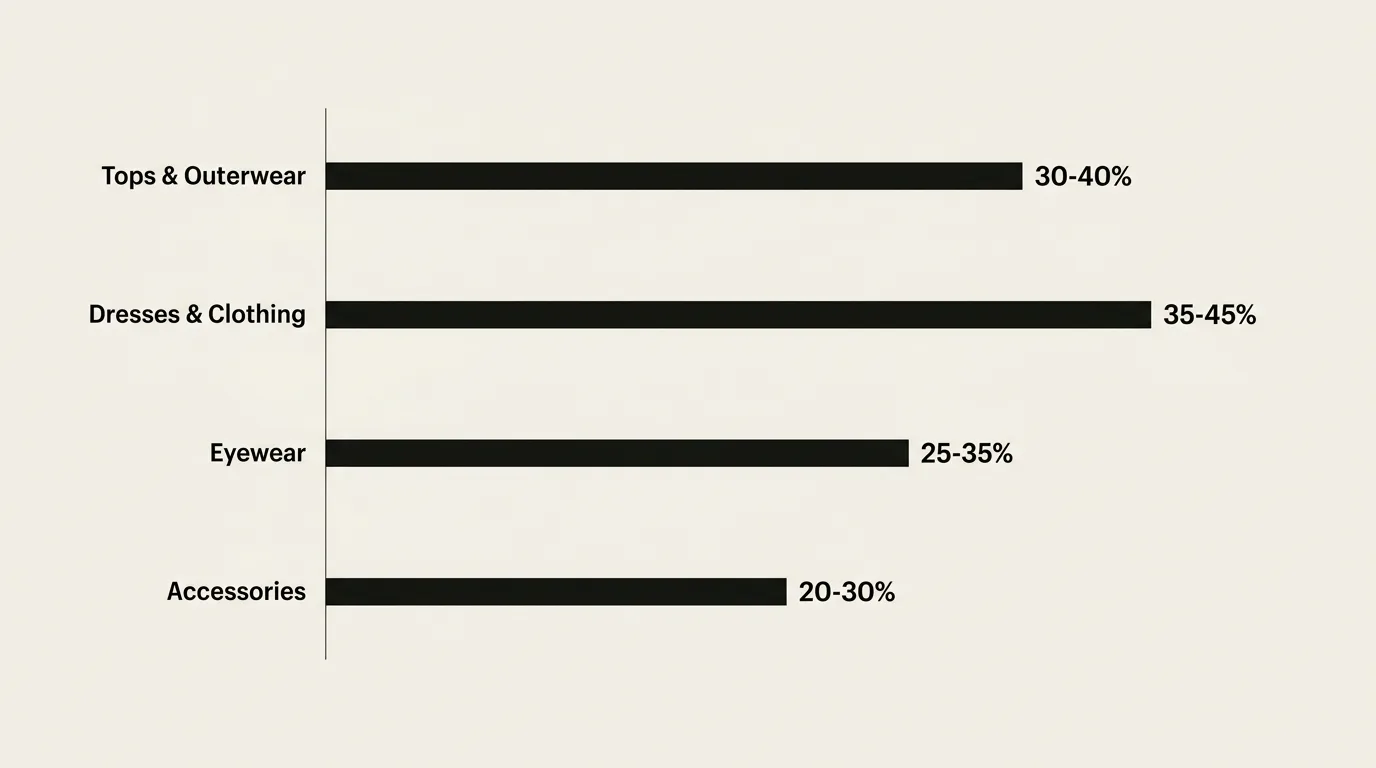
- Tops and outerwear: 30-40% reduction — customers evaluate fit and proportion more accurately
- Dresses and clothing: 35-45% reduction — full-body visualization has the highest impact
- Eyewear: 25-35% reduction — frame shape and face compatibility are easier to assess
- Accessories: 20-30% reduction — scale and styling context reduce mismatched expectations
Conversion Lift
Beyond returns, AI try-on also lifts conversion rates. Customers who engage with the try-on feature convert at 15-32% higher rates than those who browse product photos alone. The try-on experience itself acts as an engagement tool — customers spend more time on the product page, explore more variants, and build stronger purchase intent.
Average Order Value
Some merchants report higher average order values from try-on users, though the effect is less consistent. The hypothesis is that customers who feel confident about fit are more willing to buy full-price items rather than waiting for sales.
ROI Calculation: A Worked Example
Let us walk through a concrete ROI scenario for a mid-size fashion brand.
Starting assumptions:
- Monthly orders: 10,000
- Average order value: $85
- Current return rate: 28%
- Average cost per return: $18 (shipping + handling + restock)
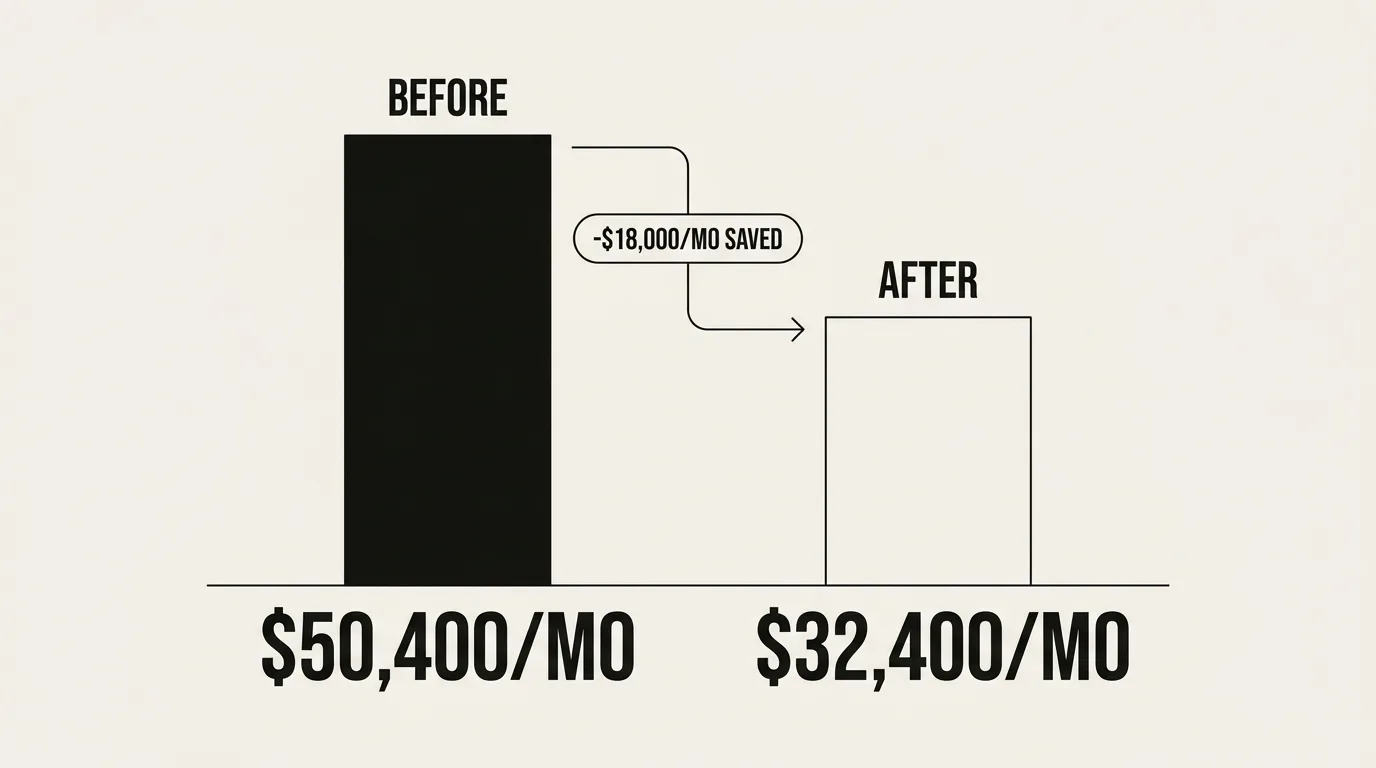
- Monthly return cost: 10,000 x 0.28 x $18 = $50,400
After implementing AI try-on (conservative estimate):
- Return rate drops to 18% (a 36% relative reduction)
- Monthly return cost: 10,000 x 0.18 x $18 = $32,400
- Monthly savings: $18,000
- Annual savings: $216,000
Additional revenue from conversion lift:
- Assume 20% of visitors engage with try-on
- Assume 20% conversion lift for those users
- Additional monthly revenue: 10,000 x 0.20 x 0.20 x $85 = $34,000
- Annual additional revenue: $408,000
Combined annual impact: $624,000 — from reduced returns and increased conversions. Even with conservative estimates, the ROI is substantial for brands processing thousands of orders monthly.
Why Clothing Is the Biggest Opportunity
AI swap virtual try-on has the largest impact on clothing for a structural reason: fit uncertainty.
With eyewear, the primary uncertainty is aesthetics — "Do these frames suit my face?" The product itself fits nearly everyone the same way. With clothing, the uncertainty is both aesthetic and functional — "Does this look good on me?" and "Does this fit my body?"
AI swap addresses both questions simultaneously. The customer sees the garment on their own body, in their own proportions. A size M shirt that fits perfectly on a 5'10" model may look entirely different on a 5'4" customer, and AI swap shows that reality.
This is why clothing generates the highest return reduction percentages. The gap between customer expectation and reality is largest for apparel, and AI try-on closes that gap more effectively than any other intervention — including detailed size charts, customer reviews, or fit recommendation algorithms.
Implementation Considerations
For merchants evaluating AI try-on as a returns-reduction strategy, several practical factors matter.
Product Coverage
The impact scales with coverage. Enabling try-on on your top 20 products will move the needle, but enabling it across your full catalog maximizes the returns reduction. AI swap makes broad coverage feasible because it does not require 3D models — standard product photography is sufficient.
Feature Visibility
Try-on only reduces returns if customers use it. Position the try-on button prominently on product pages — near the product images, above the fold if possible. Merchants who bury the feature in a tab or secondary section see lower engagement and correspondingly lower impact.
Mobile Experience
Over 60% of fashion e-commerce traffic comes from mobile devices. The try-on experience must work seamlessly on phones. TryOn Virtual's widget is responsive by default, but ensure your product page layout does not obscure the try-on button on small screens.
Measuring Impact
Set up proper A/B testing before and after enabling try-on. Track return rates by product, by customer segment, and by whether the customer used the try-on feature. The analytics dashboard provides these breakdowns out of the box.
Getting Started
Reducing returns with AI try-on does not require a massive technical investment. With the AI Swap Try-On feature, merchants can go live using their existing product photography — no 3D modeling pipeline needed.
The fastest path is to enable try-on on your highest-return products first, measure the impact over 30-60 days, and then expand coverage based on the results. Whether you are on Shopify, WooCommerce, or a custom platform, the merchant panel gives you the tools to manage everything from a single dashboard.
This article is part of The Complete Guide to Virtual Try-On in Ecommerce — our full breakdown of try-on types, product categories, ROI, and platform options.