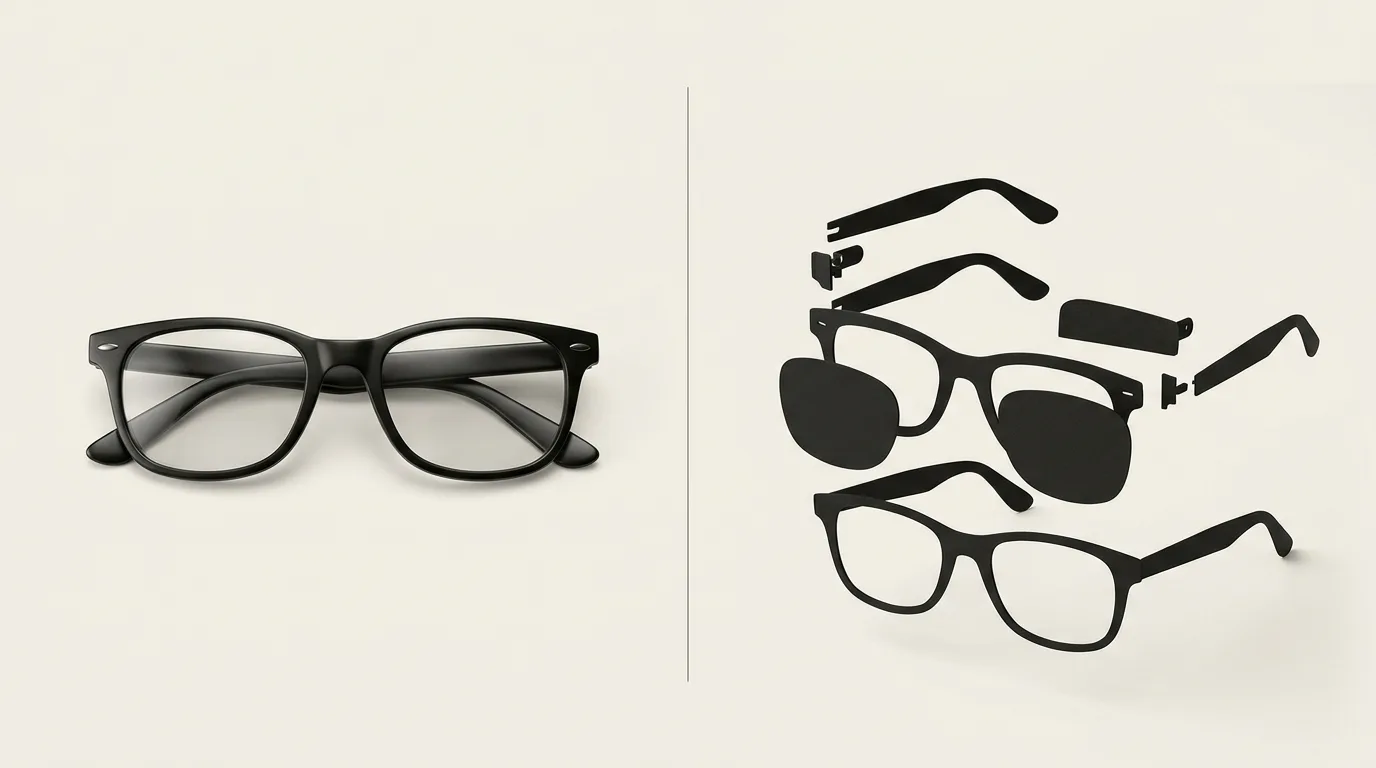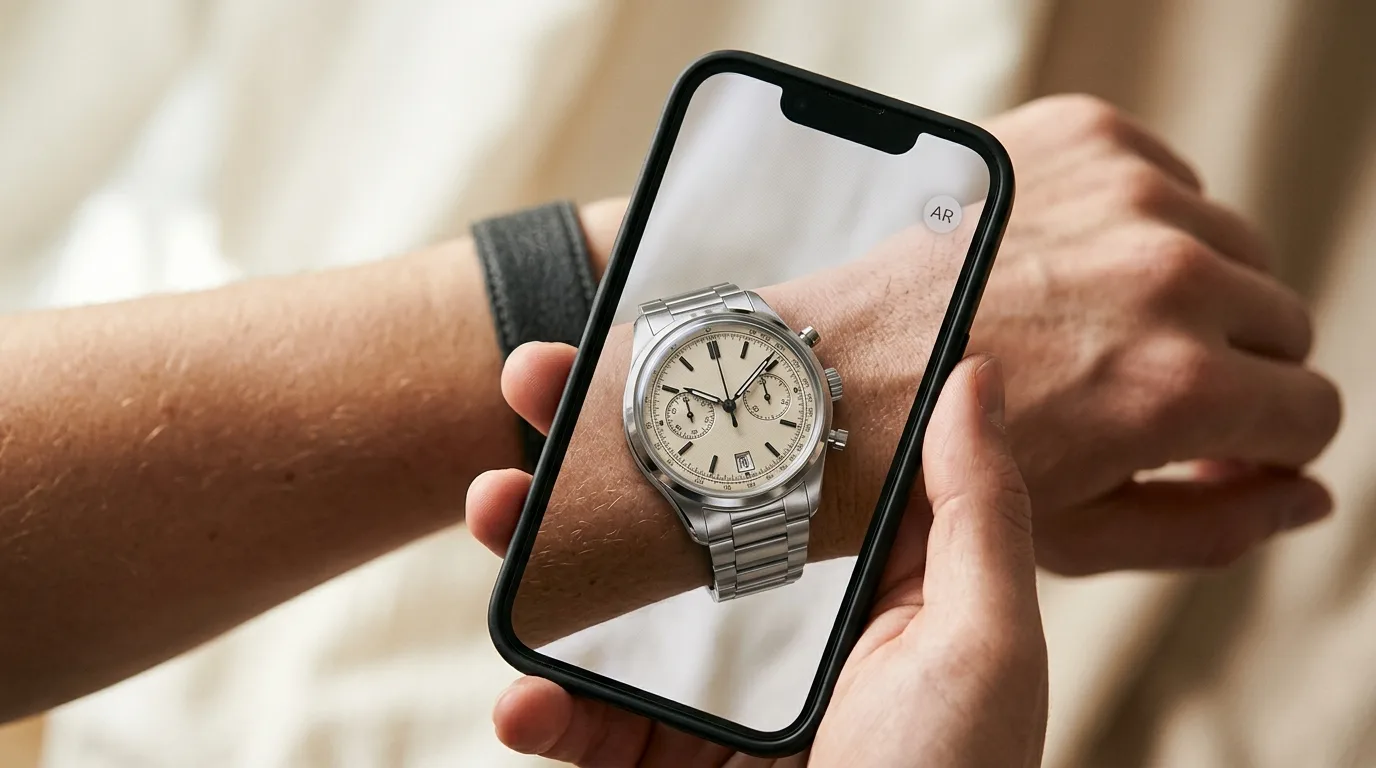
Virtual try-on for eyewear is a solved problem. Customers point a webcam at their face, glasses appear, they turn their head and the frames track along — it works, it converts, and most eyewear brands online now offer some version of it.
So when watch brands ask "can we do the same thing for watches?" the instinct is to assume it's the same technology pointed at a wrist instead of a face. It's not. The two share a foundation — real-time AR, 3D models, PBR rendering — but almost everything above that foundation is different. The tracking problem is harder, the sizing problem matters more, and the materials are the most demanding part of the whole pipeline.
This is a guide for watch retailers deciding whether AR try-on is worth it, and what to expect from it that's genuinely different from the eyewear version they've probably already seen.
The Short Version
- Both eyewear and watch try-on are real-time AR — the product renders live on the customer's camera feed, not pasted onto an uploaded photo. That's different from clothing or shoes, which use AI photo swap.
- The hard part for eyewear is the face; for watches it's the wrist. A wrist is a smaller, faster-moving, less-distinctive target than a face, which makes tracking the harder engineering problem.
- Sizing matters far more for watches. A 38mm case and a 42mm case look meaningfully different on the same wrist, and case size is a top reason watches get returned. Eyewear has nothing equivalent.
- Materials are where watches get won or lost. Brushed steel, polished gold, ceramic, and the reflections on a glossy dial are the most demanding things a try-on renderer has to do.
If you sell watches online, the question worth answering isn't "does AR try-on exist for watches" — it does, and you can try it live — it's "does it solve the specific reasons watch shoppers hesitate." That's what the rest of this covers.
What Eyewear and Watch Try-On Share
Start with the common ground, because it's real. Both are built on the same core: a 3D model of the product, rendered with physically based materials, composited live onto a video feed from the customer's own camera, in the browser, with no app to download.
Both are also real-time AR, which is the important distinction from other try-on categories. When a shopper tries on glasses or a watch, they move — turn the head, rotate the wrist — and the product follows in real time at 60fps. That live responsiveness is what makes it feel like trying something on rather than looking at a mockup. Clothing, shoes, and jewelry generally use AI photo swap instead, where the customer uploads a photo and the product is composited onto it. Eyewear and watches are the two categories where live tracking is both possible and worth the engineering.
And both solve the same commercial problem: the shopper can't answer "will this look right on me?" from a product photo on a white background. For glasses it's face shape; for watches it's wrist proportion. In both cases the uncertainty is what drives hesitation and returns.
That's where the similarity ends.
Difference 1: Wrist Tracking Is Harder Than Face Tracking
Eyewear try-on rides on top of a decade of face-tracking research. A human face is a large, high-contrast, feature-rich target — eyes, nose, mouth, and brow give a tracker hundreds of stable landmarks to lock onto. Modern face meshes use 468 of them. The face also moves relatively slowly and predictably, and it's almost always facing the camera. All of that makes glasses placement robust.
A wrist is the opposite kind of target:
- Fewer distinctive features. A wrist is a smooth, roughly cylindrical surface. There's no equivalent of "eyes and nose" to anchor to, so the tracker has to infer orientation from edges, the hand, and the forearm.
- It moves fast and rotates a lot. People flick and rotate their wrist far more freely than they move their head. The watch has to stay glued to the right spot through quick rotation, including moments where it's turning away from the camera.
- It's smaller in frame and self-occludes. The hand and sleeve frequently cover part of the wrist, and the watch itself wraps around a surface that's partly hidden at any given angle.
The practical upshot: watch try-on uses AI-powered wrist-landmark detection rather than the face-mesh approach, and getting it to feel stable is a genuinely harder computer-vision problem. When it's done well, the watch sits naturally on the wrist and follows rotation; when it's done badly, it slides or floats. This is the single biggest technical reason watch try-on arrived later than eyewear.
Difference 2: Case Size Is a Real Number, and It Matters
Here's a difference that's easy to underestimate. With glasses, "fit" is mostly about style — does this shape suit my face. There's no spec a customer is anxious about getting wrong.
Watches are different. Case diameter is a number people care about and frequently get wrong. A 36mm dress watch and a 44mm diver are different products on the wrist, and "the case was bigger/smaller than I expected" is one of the most common reasons watches come back. A photo on a white background gives no sense of scale — a 40mm watch and a 46mm watch look nearly identical in a catalog shot.
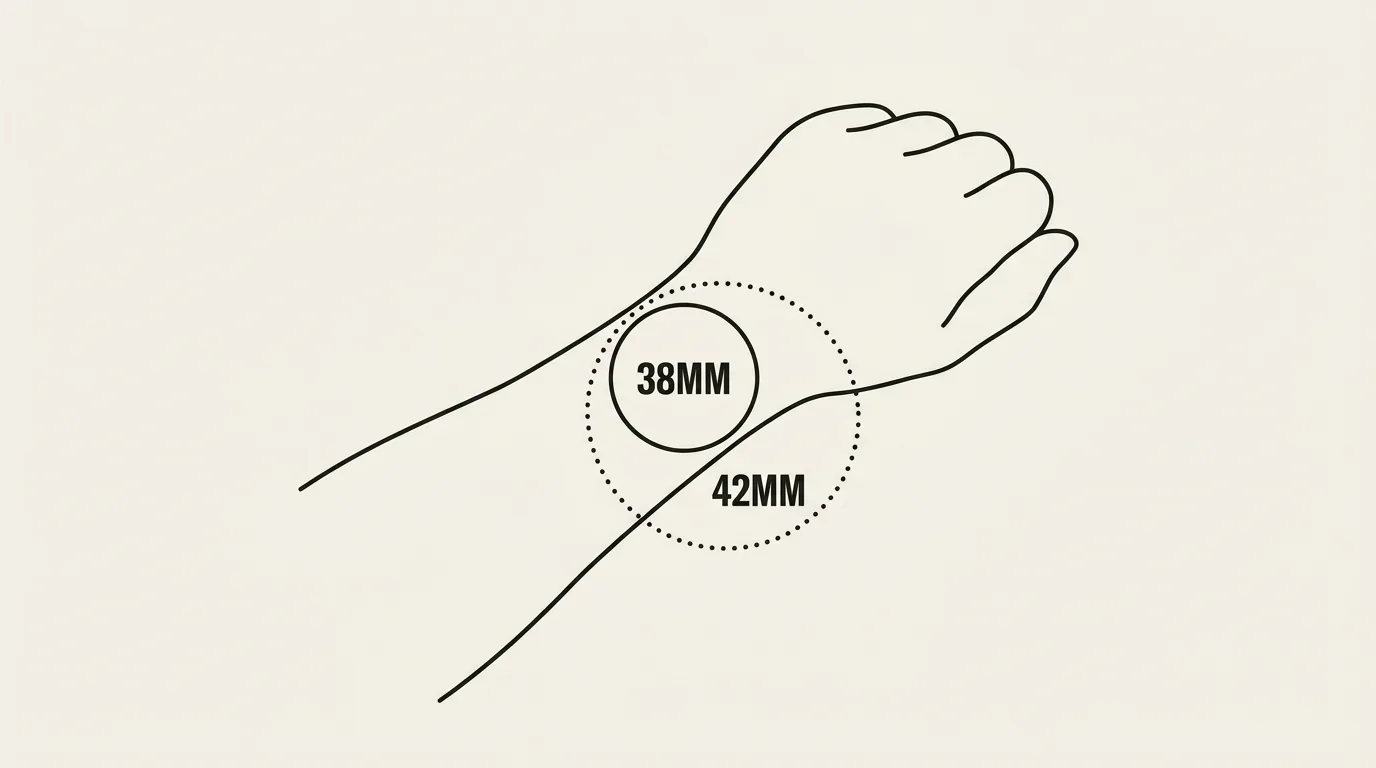
This is where watch try-on does something eyewear try-on never has to: it estimates wrist circumference and renders the watch at true proportion, so a shopper can see that a 42mm case actually covers most of their wrist while a 38mm sits more modestly. Seeing "this specific size on my wrist" is the entire value proposition for a watch shopper in a way that has no eyewear parallel. If you only take one thing from this comparison: for watches, accurate sizing isn't a nice-to-have, it's the point.
Difference 3: Materials Are the Hardest Part
Eyewear materials are mostly plastics, acetate, thin metal temples, and lenses. Lenses are genuinely tricky — transparency, tint, and reflections — but the surface area is small.
A watch is a showcase of difficult materials all at once:
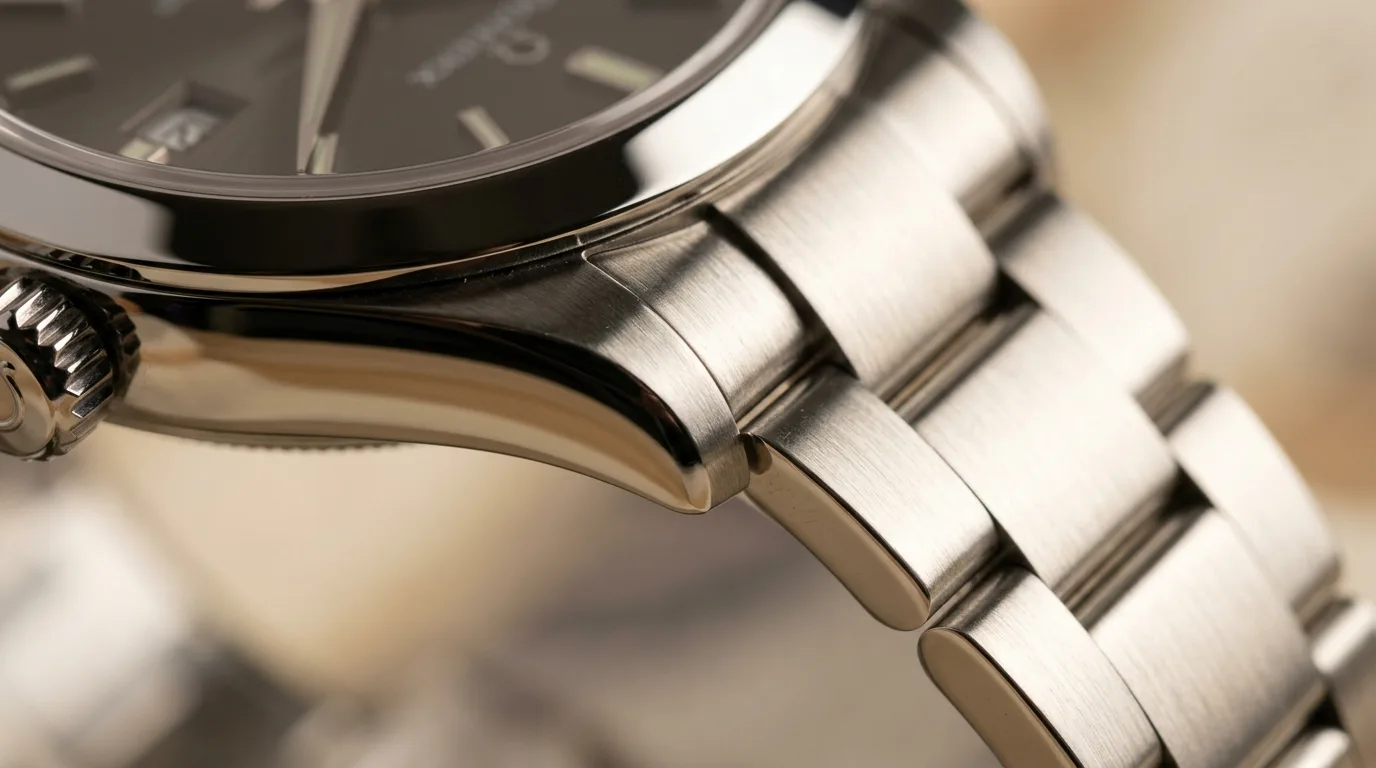
- Polished and brushed metals — steel, gold, two-tone — that have to catch and move light correctly as the wrist rotates. Polished gold that looks flat or grey kills the perception of value instantly.
- The dial and crystal, which is a glossy, often slightly domed surface with its own reflections sitting under glass.
- Straps and bracelets — link bracelets, leather with visible grain and stitching, rubber, ceramic — each needing different roughness and texture to read as real.
This is why PBR rendering and HDR environment mapping matter more for watches than almost any other category. The realism of a watch try-on is decided by whether the metal looks like metal and the gold looks like gold under moving light. A cheap render makes a luxury watch look like a toy — which is worse than no try-on at all when you're selling a premium product. The model quality and material accuracy carry more weight here than the tracking does.
Side by Side
| Dimension | Eyewear Try-On | Watch Try-On |
|---|---|---|
| Tracking target | Face (468 landmarks, feature-rich) | Wrist (fewer features, fast rotation) |
| Tracking difficulty | Mature, very robust | Harder — smaller, self-occluding target |
| Why people hesitate | Does this style suit my face | Does this size suit my wrist |
| Sizing role | Stylistic, no critical number | Critical — case diameter drives returns |
| Hardest materials | Lens transparency & tint | Polished metals, gold, dial reflections |
| Try-on type | Real-time AR | Real-time AR |
| Maturity | Live for merchants, widely deployed | Live for merchants |
What This Means If You Sell Watches
A few practical takeaways for a watch brand evaluating try-on:
Judge it on metal and size, not on novelty. Any try-on can put a rectangle on a wrist. The two things that decide whether it actually reduces returns and builds buying confidence are (1) does the watch render with believable metal and dial reflections, and (2) does it convey real case size on the shopper's wrist. When you test a vendor, test those two things specifically.
The model quality is doing most of the work. Because materials matter so much, the 3D asset behind each watch is where the experience lives or dies. A well-built model with accurate PBR materials looks convincing; a rushed one looks plastic. This is true for eyewear too, but watches are less forgiving.
It plugs into the same stack as everything else. If you're on Shopify or a custom storefront, watch try-on installs the same way the eyewear version does — a button on the product page, no app for the customer to download. And the analytics work the same: you can see try-on engagement and the conversion gap between shoppers who used it and those who didn't.
Watch try-on is live for merchants. Real-time wrist tracking is available to merchants alongside eyewear try-on, so you can put it on your own catalog today — or try the live wrist demo first.
Frequently Asked Questions
Is watch virtual try-on real AR or just a photo overlay? It's real-time AR. The 3D watch renders live on the customer's camera feed and tracks the wrist as it moves and rotates — the same category of technology as eyewear try-on, not a static photo composite. Clothing and shoes use AI photo swap; watches and glasses use live tracking.
Why did watch try-on take longer to arrive than eyewear? Wrist tracking is a harder computer-vision problem than face tracking. A wrist has fewer distinctive features, moves and rotates faster, and partly hides itself at most angles, so keeping a watch locked in place naturally took longer to get right than placing glasses on a feature-rich face.
Can customers see the actual case size on their wrist? Yes — that's one of the most valuable parts. The system estimates wrist circumference and renders the watch at true proportion, so a shopper can see how a 38mm versus a 42mm case actually sits on their wrist. Misjudged case size is a leading cause of watch returns, and this directly addresses it.
Will a luxury watch look cheap in try-on? Only if the model and materials are poor. With accurate PBR materials and HDR reflections, polished gold, brushed steel, and glossy dials render convincingly. Material accuracy matters more for watches than almost any other category, which is why the quality of the 3D model is the thing to scrutinize.
Does it work on Shopify? Yes. Watch try-on installs the same way as the rest of the platform — a try-on button on your product pages with no customer app download, on Shopify, WooCommerce, or custom storefronts.
How is this different from a smart mirror in a watch boutique? A smart mirror is in-store hardware; web try-on reaches every online shopper on the device they already own. For watches the online channel is usually where size and material uncertainty causes the most hesitation. We cover the trade-offs in smart mirror vs virtual try-on.
The Bottom Line
Watch try-on and eyewear try-on look like the same feature from the outside, and at the foundation they are — both are real-time AR built on 3D models and physically based rendering. But the watch version solves a harder tracking problem, answers a different question for the shopper (size, not just style), and lives or dies on how convincingly it renders metal and light.
For a watch brand, that's good news: the two hardest sources of online hesitation — "how big is it really" and "does it look as premium as the photos" — are exactly what AR try-on is built to answer. Try the live wrist demo, or see how virtual try-on works across categories.
This article is part of The Complete Guide to Virtual Try-On in Ecommerce — our full breakdown of try-on types, product categories, ROI, and platform options.